
About the Authors

Noah Fleming
Assistant Professor
Department of Computer Science
Lund University
Lund, Sweden
noah[td]fleming[ta]cs[td]lth[td]se
https://noahrfleming.github.io/
Assistant Professor
Department of Computer Science
Lund University
Lund, Sweden
noah[td]fleming[ta]cs[td]lth[td]se
https://noahrfleming.github.io/
Noah Fleming is an assistant professor at
Lund University. Prior to
that he was an assistant professor at
the Memorial University of Newfoundland,
was a postdoctoral researcher at
UC San Diego, and a research fellow at the
Simons Institute. He
completed his Ph.D. under the supervision of
Toniann Pitassi at the
University of Toronto. He focuses
mainly on proof complexity, circuit complexity, TFNP, and related areas.

Mika Göös
Assistant Professor
School of Computer and Communication Sciences
EPFL
Lausanne, Switzerland
mika[td]goos[ta]epfl[td]ch
https://ic-people.epfl.ch/~goos/
Assistant Professor
School of Computer and Communication Sciences
EPFL
Lausanne, Switzerland
mika[td]goos[ta]epfl[td]ch
https://ic-people.epfl.ch/~goos/
Mika Göös is an assistant professor at EPFL
in the Theory Group. Previously, he was a postdoc at
Stanford Theory, the
Institute for Advanced Study, and the
ToC group at Harvard.
He completed his Ph.D. at the
University of Toronto under
the watchful eye of
Toniann Pitassi. He
obtained his B.S. from
Aalto University, and his M.S. from the
University of Oxford. In his
spare time, Mika enjoys rock climbing and maintains a viral
YouTube climbing channel.
However, he is forsaking his dream of climbing a 7C-grade outdoor boulder
one day due to now having small children at home.
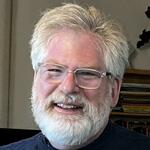
Russell Impagliazzo
Professor
Department of Computer Science and Engineering
UCSD
San Diego, California, USA
russell[ta]cs[td]ucsd[td]edu
https://cseweb.ucsd.edu/~russell/
Professor
Department of Computer Science and Engineering
UCSD
San Diego, California, USA
russell[ta]cs[td]ucsd[td]edu
https://cseweb.ucsd.edu/~russell/
Russell Impagliazzo is a professor at
UC San Diego specializing in computational
complexity theory, in particular in proof complexity, the theory of
cryptography, computational randomness, structural complexity, and
analyzing optimization heuristics and other approaches to solving hard
problems.

Toniann Pitassi
Jeffrey L. and Brenda Bleustein Professor of Engineering
Department of Computer Science
Columbia University
New York, New York, USA
tp2684[ta]columbia[td]edu
https://www.cs.columbia.edu/~toni/
Jeffrey L. and Brenda Bleustein Professor of Engineering
Department of Computer Science
Columbia University
New York, New York, USA
tp2684[ta]columbia[td]edu
https://www.cs.columbia.edu/~toni/
Toniann Pitassi is a professor at
Columbia University. She received a
Ph.D. from the University of Toronto in
1992. After that, she spent 2 years as a postdoc at
UCSD, and then 2 years as an assistant
professor at the University of Pittsburgh.
For the next four years, she was a faculty member of
the Computer Science Department at the
University of Arizona. In the fall of
2001, she moved back to the
University of Toronto
where she worked until 2021. Her primary research interests are
complexity theory,
and fairness and privacy in machine learning.
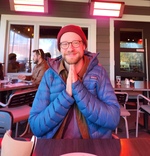
Robert Robere
Assistant Professor
Department of Computer Science
McGill University
Montreal, Quebec, Canada
robert[td]robere[ta]mcgill[td]ca
https://www.cs.mcgill.ca/~robere/
Assistant Professor
Department of Computer Science
McGill University
Montreal, Quebec, Canada
robert[td]robere[ta]mcgill[td]ca
https://www.cs.mcgill.ca/~robere/
Robert Robere is an Assistant Professor in the
School of Computer Science at
McGill University. His main research
topic is computational complexity theory, with a particular interest
in proof complexity and related topics. But this is not prescriptive,
and he likes to think about any fun problems that come his way!
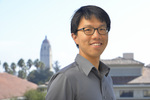
Li-Yang Tan
Assistant Professor
Department of Computer Science
Stanford University
Stanford, California, USA
lytan[ta]stanford[td]edu
https://theory.stanford.edu/~liyang/
Assistant Professor
Department of Computer Science
Stanford University
Stanford, California, USA
lytan[ta]stanford[td]edu
https://theory.stanford.edu/~liyang/
Li-Yang Tan is an associate professor of computer science at
Stanford. His research is in theoretical computer science,
with an emphasis on complexity theory.
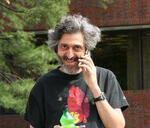
Avi Wigderson
Herbert H. Maass Professor
School of Mathematics
Institute for Advanced Study
Princeton, New Jersey, USA
avi[ta]ias[td]edu
https://www.math.ias.edu/avi/home
Herbert H. Maass Professor
School of Mathematics
Institute for Advanced Study
Princeton, New Jersey, USA
avi[ta]ias[td]edu
https://www.math.ias.edu/avi/home
Avi Wigderson is the Herbert H. Maass Professor at the
School of Mathematics,
Institute for Advanced Study,
Princeton. His research interests are in Randomness and computation,
algorithms and optimization, complexity theory, circuit complexity,
proof complexity, quantum computation and communication, and
cryptography and distributed computation.